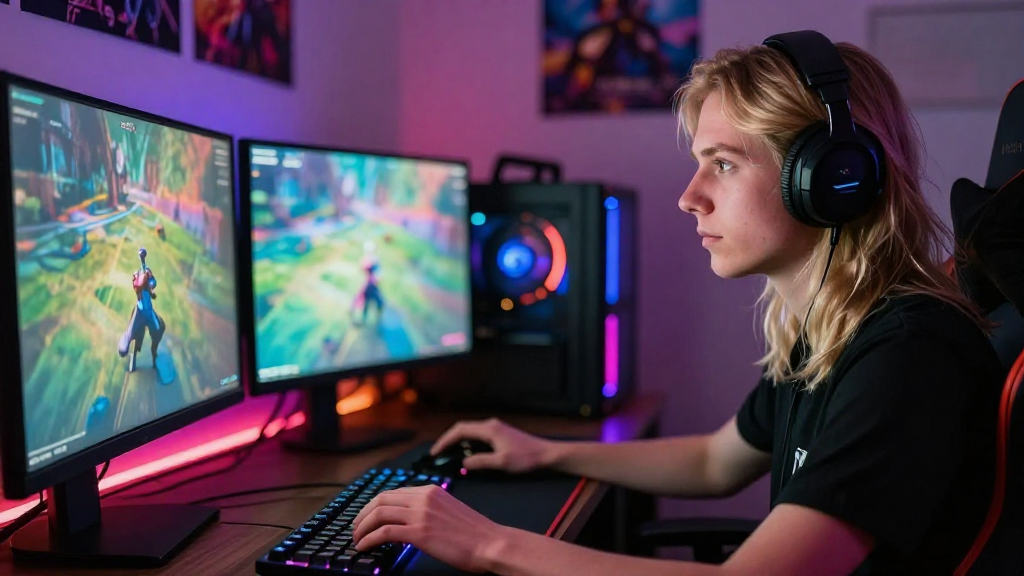
Do gamers handle multitasking better? This question has sparked debates among researchers, educators, and gaming enthusiasts alike.
In this article, we will explore the fascinating relationship between gaming and multitasking abilities, examining research findings and real-world implications.
What Is Multitasking?
Multitasking refers to the ability to perform multiple tasks or activities simultaneously or switching between tasks effectively.
In our fast-paced world, multitasking has become an essential skill in various settings, including work, education, and personal life.
How Does Gaming Facilitate Multitasking?
Video games are often designed to stimulate players’ cognitive faculties, necessitating quick thinking, adaptability, and seamless task-switching.
This could lead to the question: do gamers handle multitasking better than non-gamers? Let’s delve into how gaming can enhance multitasking skills.
-
Cognitive Load Management:
– Gamers often manage numerous objectives simultaneously.
– For example, in an action game, a player may need to shoot enemies while navigating obstacles and keeping track of resources. -
Increased Reaction Time:
– Fast-paced games can significantly improve reaction times.
– Players frequently respond to visual and auditory cues that require quick decision-making. -
Improved Visual Processing:
– Many games require players to track multiple moving objects on the screen.
– This enhances their ability to assess visual information quickly.
Do Gamers Handle Multitasking Better Than Non-Gamers?
Numerous studies have sought to answer this query.
Research suggests that regular gamers may indeed excel at multitasking compared to non-gamers. Here are some findings that support this claim:
- Improved Task Switching:
- A study published in Nature indicated that gamers could switch between tasks more efficiently.
-
This skill is essential in daily life situations where rapid changes often occur.
-
Enhanced Working Memory:
- A study conducted by University of Utah researchers found that gamers typically have better working memory.
-
This facilitates their ability to retain information necessary to complete multiple tasks.
-
Superior Problem-Solving Skills:
- Games often pose complex challenges that require strategic thinking and adaptability.
- Gamers tend to perform better in problem-solving tasks in controlled settings.
What Types of Games Enhance Multitasking Skills?
Not all games are created equal when it comes to enhancing multitasking capabilities.
Here are some types of games known to foster these skills:
-
Action Games:
– These require quick reflexes and constant attention to various elements.
– Examples include Call of Duty and Fortnite. -
Real-Time Strategy (RTS) Games:
– Players must manage resources and control units in real-time, demanding effective multitasking.
– Popular choices include StarCraft and Age of Empires. -
Simulation Games:
– Games like The Sims or Cities: Skylines ask players to juggle various aspects of building and managing environments, enhancing multitasking skills.
Can Non-Gamers Improve Their Multitasking Skills?
If you’re not a gamer, worry not!
Here are some strategies to improve your multitasking abilities—much like gamers do:
- Practice Task Management:
-
Use calendars or apps to break larger tasks into smaller, manageable parts.
-
Embrace Mindfulness Techniques:
-
Engage in mindfulness exercises that enhance focus and improve cognitive flexibility.
-
Learn from Gaming:
- Consider playing simple games or board games that can help you develop multitasking skills without the need for extensive time commitment.
What Are the Real-World Implications of Gaming on Multitasking?
Understanding whether gamers handle multitasking better can inform different sectors, including education, workplace training, and beyond.
-
Education:
– Teaching methods could incorporate gaming elements to improve engagement and multitasking skills among students. -
Workplace Training:
– Employers may benefit from integrating gamified training methods that enhance task-switching capability among employees. -
Cognitive Health:
– There is potential in using video games as cognitive therapies for conditions like ADHD where multitasking skills need improvement.
What Are the Challenges of Multitasking?
While there are advantages, multitasking can also present challenges. Here are some potential downsides:
- Reduced Quality of Work:
- Juggling multiple tasks can lead to careless mistakes.
- Mental Fatigue:
- Constantly switching tasks can drain mental resources, leading to burnout.
- Diminished Focus:
- In certain scenarios, multitasking can result in a scattered thought process, making it difficult to concentrate on a single task.
Conclusion: Do Gamers Handle Multitasking Better?
The evidence seems to point toward a favorable conclusion: yes, gamers often handle multitasking better than non-gamers.
However, it’s crucial to note that effective multitasking isn’t just about playing video games.
It involves a combination of skills that can be honed through practice, learning, and cognitive engagement.
Therefore, whether you’re a devoted gamer or just someone looking to enhance their multitasking abilities, remember:
- Play strategically.
- Break tasks into manageable parts.
- Embrace new learning methods.
Lastly, gaming can open doors for both entertainment and improved cognitive abilities, making it a win-win for those who choose to engage in the virtual world.
Now that you understand whether gamers handle multitasking better, consider tapping into the world of video games as a fun and effective way to sharpen your multitasking skills!