Looking for a Christmas gift that invites him to build, experiment, solve, or create? These educational toys turn curiosity into hands-on play across science, engineering, coding, and design.
Use age, interests, and the kind of activity he enjoys to narrow the list, whether that means a quick tabletop puzzle or a project to revisit over time.
19 Christmas Educational Toy Gift Ideas for Boys to Consider in 2026
Microscope Discovery
Prepared Microscope Slides for Kids

- Includes 60 prepared slides featuring varied biological specimens.
- Labels and an identification guide help explain the samples.
- An organized case stores the slides for use with compatible microscopes.
Best For: Kids who enjoy nature and looking closely at small things.
Portable Logic Challenge
Educational Insights Kanoodle Genius

- Offers more than 200 two-dimensional and three-dimensional puzzles.
- The case doubles as a board and holds the puzzle pieces.
- Single-player, screen-free play is recommended for ages 8 and up.
Best For: Puzzle-loving kids who want a compact challenge.
Motion and Circuit Builds

- Includes more than 50 parts for over 165 projects.
- Builds explore gears, pulleys, and motion-focused electronics.
- Color-coded pieces snap onto a grid; batteries are required.
Best For: Kids curious about motors and how electrical energy creates movement.
Build-And-Race Marble Run
Hape Quadrilla Cyclone Marble Run
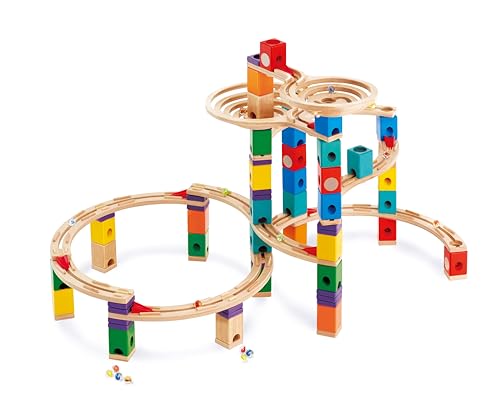
- Includes spiral funnels, curved rails, accelerators, and marbles.
- Instructions offer building ideas, with room to invent other runs.
- Designed for construction play and experimenting with paths.
Best For: Builders who like experimenting with paths and motion.
Creative STEM Building
LEGO Education SPIKE Essential

- A LEGO Education building set with a color sensor.
- Its listed educational objective is STEM learning.
- The listing describes it as a battery-powered building block toy.
Best For: Young builders interested in STEM and creative play.
Movement and Math Building
LEGO Education BricQ Motion Essential

- Includes printed building instructions and replacement elements.
- Numbered tiles support visual math practice.
- The set lists creative thinking and teamwork as educational objectives.
Best For: Kids interested in movement, balance, and simple machines.
Light and Sound Circuits

- Includes 55 parts for more than 175 electronics projects.
- Projects explore light and sound, including a music-responsive light build.
- Color-coded modules snap onto the grid; batteries are required.
Best For: Older beginners ready for more involved circuit projects.
Space Engineering Build
LEGO Technic Mars Rover Perseverance

- Builds a model of NASA’s Perseverance rover and an Ingenuity helicopter.
- Features 360-degree steering, movable arms, and articulated suspension.
- An accompanying augmented reality app explores the rover and its mission.
Best For: Older kids fascinated by space exploration and engineering.
Screen-Free Coding Logic

- Uses maps and tokens across 60 levels of challenges.
- Includes guide scrolls, action tokens, conditional tokens, and instructions.
- Designed for one player, ages 8 and up.
Best For: Kids ready for screen-free introductions to programming logic.
First Chemistry Experiments
Thames & Kosmos Kids First Chemistry Set

- Designed as an introductory chemistry set for young children.
- Includes a 48-page, full-color instruction manual.
- Activities include identifying chemicals and observing carbon dioxide.
Best For: Young science fans ready to follow guided experiments.
Dinosaur Fossil Dig
National Geographic Dinosaur Fossil Dig Kit
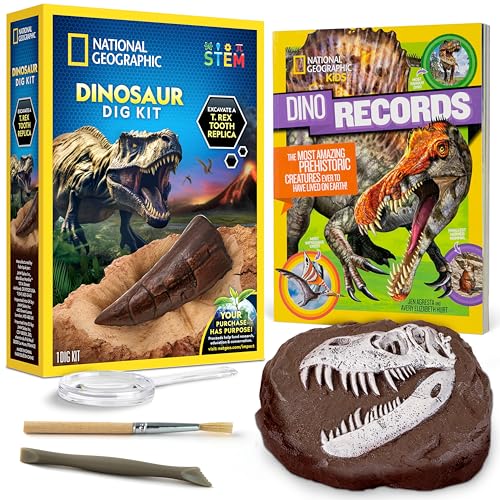
- A dig brick contains a replica T. rex tooth and a coprolite sample.
- Includes excavation tools and a full-color dinosaur book.
- The activity introduces fossil discovery and paleontology.
Best For: Kids fascinated by dinosaurs, fossils, and paleontology.
Sun-Powered Robot Builds

- Builds eight robot models, including a racer, tank, and dinosaur.
- Uses an included solar panel, with no batteries required.
- A 48-page manual guides assembly and shares solar science facts.
Best For: Kids interested in renewable energy and mechanical builds.
Gravity Marble Logic

- Includes nine towers, three marbles, a grid, and a target piece.
- 60 challenge cards range from beginner to expert.
- Single-player tabletop play involves building marble paths.
Best For: Kids who like puzzles, construction, and spatial challenges.
Geode Discovery Kit
National Geographic Break Open Geodes

- Includes 10 natural geodes to open and explore.
- Comes with safety goggles, a magnifying glass, and a display stand.
- A full-color guide explains how geodes form.
Best For: Kids curious about geology and natural formations.
Classic Electronics Projects

- Supports more than 300 electronics projects with 60-plus pieces.
- Project examples include radios, alarms, and doorbells.
- Color-coded parts snap onto a grid without soldering or tools.
Best For: Boys who enjoy building and discovering how circuits work.
Rock Tumbling Hobby
National Geographic Hobby Rock Tumbler Kit
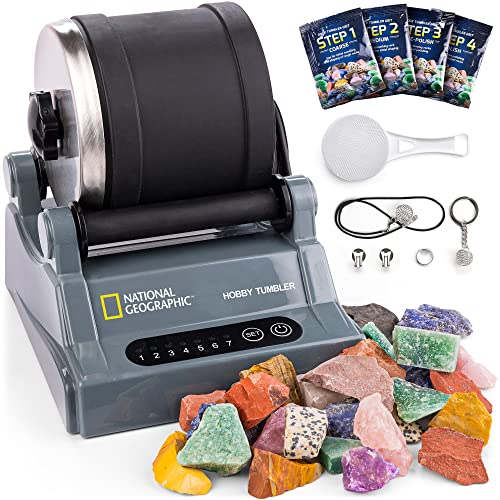
- Includes a tumbler, four polishing grits, and a sifter.
- Comes with nine types of rough gemstones and a learning guide.
- The tumbler has a one-touch timer and automatic shutoff feature.
Best For: Curious kids who like rocks, minerals, and science projects.
Portable Creative Building
LEGO Classic Creative Suitcase

- Includes 213 LEGO pieces in a suitcase with sorting compartments.
- Supports open-ended building and imaginative play.
- The portable case stores bricks and makes them easier to take along.
Best For: Kids who prefer open-ended building over following one model.
Three-Dimensional Art Making
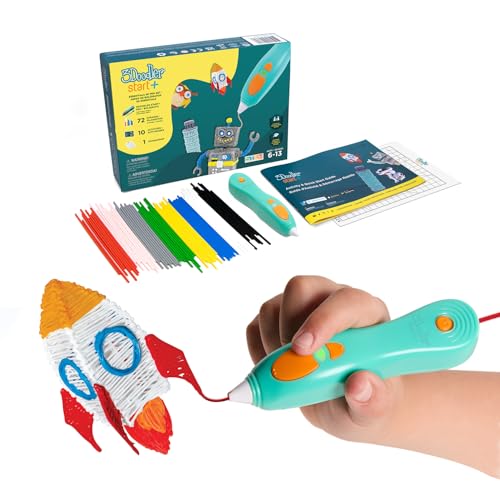
- Includes a 3D pen, DoodlePad, mixed-color filament, cable, and activity guide.
- Designed for children ages 6 and up, with no external hot parts.
- Activities support creative projects and spatial awareness.
Best For: Creative kids curious about design and making three-dimensional shapes.
Christmas Educational Toy Gift Ideas for Boys: How to Choose
Christmas educational toy gift ideas for boys work best when the activity matches the child’s interests and current skills. Start with what he already likes to do: a child drawn to space may enjoy a rover building set, while a puzzle fan may prefer a logic challenge. For a nature-minded learner, microscopy, geology, or a fossil dig can make scientific ideas tangible. If he likes making things move, consider a marble run, robotics kit, or electronics projects.
Age guidance is a useful first filter, but it does not tell the whole story. Think about whether he is comfortable following a sequence of instructions, handling small pieces, or working through a challenge independently. Some activities are designed for solo play; others can involve a parent, sibling, or friend. An open-ended building set offers room to invent, while a structured kit gives a clearer path from setup to finished project.
Match the Activity to His Interests
Building, Engineering, and Motion
Construction sets and marble runs let kids explore how parts fit together and how movement changes with a design. A set with instructions can help a beginner get started, while projects that allow different configurations invite repeated experimentation. Check the included components and age range so the activity feels approachable rather than frustrating.
Science, Nature, and Discovery
Science kits can center on observing prepared specimens, uncovering a fossil replica, breaking open geodes, or learning about rocks. Consider where and how the activity will be used. Some kits involve small specimens or tools, and a hands-on experiment may be more enjoyable with an adult nearby. A guide or book can extend the activity by giving context to what a child sees or builds.
Logic, Coding, and Creative Making
Screen-free puzzle games offer a compact way to practice planning and problem-solving. Coding logic games use tokens, maps, or other physical pieces to represent instructions, while a creative pen kit gives a child a way to form three-dimensional shapes. If the toy uses a tablet, verify the device requirement and compatibility before choosing it.
Set a Budget That Fits the Gift
Educational gifts span small tabletop games, individual science activities, and larger building or electronics kits. Decide on a comfortable spending range, then compare what the child can do with the set: the number of projects, whether it includes its own guide or tools, and whether it needs a compatible device or batteries. A lower-cost puzzle may suit a stocking or smaller exchange; a larger kit may be the main present. Avoid judging value by piece count alone—look for an activity he is likely to return to.
Personalization Tips for a Thoughtful Choice
Make the gift feel personal by connecting it to a current interest: a favorite subject at school, a fascination with dinosaurs, a love of building, or a desire to understand how machines work. Consider the setting too. A compact logic game may suit travel or a small play area, while a multi-part construction project needs a place to spread out. If the gift is for a younger child, consider whether someone will be available to help with setup or instructions.
Last-Minute Christmas Buying Advice
Before ordering, confirm the age recommendation and read the included-components list carefully. Check whether batteries, a compatible iPad, or another device are required; the Osmo kit, for example, requires an iPad that is not included. For experiment kits and projects with small parts, plan for adult supervision where appropriate. Retail availability and delivery timing can change, so check the seller’s current listing and shipping estimate rather than assuming a gift will arrive by a particular date.
Choose the kind of play he will be excited to begin: a puzzle to solve, a model to build, or an experiment to explore. A well-matched educational toy can make Christmas break an inviting time to follow a question and see where it leads.